Research Theme

Democratic Accountability

Research on how citizens evaluate leaders, assign responsibility, and connect governing choices to democratic judgment.

Democratic Accountability Publications

Publication Type

Research Pathways

2026 Article

Rising Seas, Rising Concerns: How Climate Change Vulnerability Shapes Opinions Towards Policy

Environmental Politics · 2026

Tyler Reny, Andrew Reeves, Dino P. Christenson

Living in areas vulnerable to rising sea levels is associated with greater support for climate mitigation policies, especially among residents with strong community attachment.

Related themes Democratic Accountability
View abstract +

Public opinion towards human-induced climate change is polarized along partisan lines. Indeed, scholars debate whether direct experiences with the consequences of climate change result in durable effects on opinions or behaviors. Our analysis of hundreds of thousands of survey respondents and nearly 30,000 precinct-level voting returns challenges this emerging consensus for one kind of climate change outcome: rising sea levels. We find that persistent vulnerability to rising sea levels is associated with opinions and behaviors about global warming. Coastal residents affected by sea-level rise are more likely to support climate mitigation policy. This association is strongest among those firmly attached to their communities, as opposed to those with the most to lose financially. We speculate that sea-level rise is exceptionally salient in the minds of those affected as an ever-present reminder of the inevitable toll of climate change.

County-level U.S. map of sea-level-rise susceptibility from Rising Seas, Rising Concerns
2024 Article

The Urban-Rural Divide and Residential Contentment as Antecedents of Political Ideology

Cities · 2024

James G. Gimpel, Andrew Reeves

The study finds that lower place attachment in urban areas contributes to more progressive political attitudes, while higher contentment in rural areas is associated with conservatism, helping explain the urban-rural political divide in the US.

View abstract +

We explore the foundations of the urban-rural political gulf, which is well-documented in the United States and other western democracies. We theorize that it is anchored in the variable extent of residents’ satisfaction and place attachment. Consistent with a long tradition of sociological findings, we first demonstrate that attachment to one’s neighborhood of residence is much higher among rural populations than in big cities. This variation in place attachment is an important font of political and policy attitudes, substantively contributing to the ideological differences between urban and rural areas. Politically relevant grievances arise most acutely when they are shared as prevailing conditions in specific social environments. The more dissatisfied one is with the place they live, the more attractive they find the policy goals and political agenda of liberal progressivism in US politics. Greater contentment with place, on the other hand, is predictive of politically conservative viewpoints.

Featured visual from The Urban-Rural Divide and Residential Contentment as Antecedents of Political Ideology
2023 Article

Democratic Values and Support for Executive Power

Presidential Studies Quarterly · 2023

Andrew Reeves, Jon C. Rogowski

Americans’ commitments to democratic values shape when they accept or resist expanded executive authority.

View abstract +

Attempts by elected executives to consolidate power have generated alarm and raised concern about democratic backsliding. We study mass attitudes toward the institutional power of the office of the presidency and argue that individuals' democratic values shape views of executive power. Using data from 26 countries in the Americas and 37 countries in Africa, we find support for our perspective. While supporters of the incumbent president express more favorable views toward executive power, we also show that individuals who express stronger commitments to democracy are less supportive of institutional arrangements that favor the executive. Our results demonstrate that attitudes toward the institutions of government are not shaped only by partisanship and other ephemeral political factors, but also by citizens' core commitments to values over governance.

Featured visual from Democratic Values and Support for Executive Power
2022 Article

Crime and Presidential Accountability: A Case of Racially Conditioned Issue Ownership

Public Opinion Quarterly · 2022

Benjamin Noble, Andrew Reeves, Steven W. Webster

Anxiety about crime reduces presidential approval, but this effect is conditioned by both the race of the respondent and the party of the president, with White Americans punishing Democratic presidents and Black Americans punishing Republican presidents when anxious about crime.

View abstract +

Americans are anxious about crime regardless of their actual exposure or risk. Given this pervasive concern, US presidents frequently talk about crime, take actions to address it, and list crime prevention efforts among their top accomplishments. We argue that presidents act this way, in part, because fear of crime translates into lowered presidential approval. However, this penalty is not applied evenly. Given the parties’ stances toward crime and the criminal justice system, White Americans punish Democratic presidents (i.e., Clinton and Obama) more severely when they are anxious about crime, while Black Americans are more punitive toward Republican presidents (i.e., Bush and Trump). We examine twenty years of survey data and find evidence consistent with our theory. Our results suggest that the relationship between fear of crime and presidential accountability is conditioned by an individual’s race and the president’s party.

Featured visual from Crime and Presidential Accountability: A Case of Racially Conditioned Issue Ownership
2022 Chapter

Electoral Geography, Political Behavior and Public Opinion

Handbook on Politics and Public Opinion, Edward Elgar Publishing · 2022

James G. Gimpel, Andrew Reeves

Electoral geography shows how local context and spatial patterns structure political behavior and public opinion.

View abstract +

Politically relevant identities and opinions about politics and government are neither randomly nor evenly distributed across space. The task of social scientists studying electoral geography is to understand why. Explanations go to individual characteristics, the characteristics of the settings where they live out their lives, or interesting interactions of the two. Moreover, social influence apparently has a physical and geographic component in the sense that proximity matters. Although people can form more contacts over longer distances than in the past, that does not seem to have diminished the greater weight placed on contacts close-by, pointing to the sustained coincidence of social and geographic space. Size and density of settlement also matter over and above compositional effects, continuing to account for many negative social outcomes. The chapter closes with the consideration of challenges to social scientific inference posed by the effort to account for the experience of a living in a multi-level world.

Featured visual from Electoral Geography, Political Behavior and Public Opinion
2022 Article

American Journal of Political Science

Partisanship, Economic Assessments, and Presidential Accountability

American Journal of Political Science · 2022

Zoe Ang et al.

This study finds that while partisanship influences Americans' economic assessments following a change in presidential party, the effects are statistically significant but modest, suggesting partisanship does not seriously undermine presidential accountability.

View abstract +

Few issues are more salient for voters or more important in political decision making than economic conditions, and no American public official is more closely associated with the economy than the president. Existing scholarship disagrees, however, about how partisan loyalties affect economic evaluations. We study how partisan control of the presidency affects economic perceptions using eight waves of panel data collected around the 2016 presidential election from a national probability sample. We find that although individual-level perceptions are largely stable across time, the change in partisan control of the White House was associated with more positive evaluations among Republicans and more negative evaluations among Democrats. These effects are statistically significant yet substantively modest in magnitude. Our results indicate that partisanship is less strongly associated with economic assessments than some previous scholarship has claimed and suggest more sanguine conclusions about the prospects for presidential accountability even in a partisan era.

River plots comparing household economic perceptions among Republicans and Democrats over time
2022 Article

Partisanship, Trump, and the Normative Implications of Presidential Particularism: A Response to Pasachoff’s Executive Branch Control of Federal Grants

Ohio State Law Journal Online · 2022

Douglas Kriner, Andrew Reeves

This article responds to Pasachoff’s analysis of executive branch control over federal grants, discussing the normative and empirical implications of presidential particularism, especially in the context of partisanship and the Trump administration.

Featured visual from Partisanship, Trump, and the Normative Implications of Presidential Particularism: A Response to Pasachoff’s Executive Branch Control of Federal Grants
2022 Article

Pass the Buck or the Buck Stops Here? The Public Costs of Claiming and Deflecting Blame in Managing Crises

Journal of Public Policy · 2022

David R. Miller, Andrew Reeves

Citizens evaluate leaders differently when officials claim responsibility, deflect blame, or govern through crisis.

Related themes Democratic Accountability
View abstract +

When things go wrong, and the government may be to blame, the public support enjoyed by elected executives is vulnerable. Because attribution of responsibility is often not straightforward, elected executives can influence citizens’ evaluations of their performance through presentational strategies, or explanatory frames which describe their roles in the management of the crisis. We examine the effectiveness of two ubiquitous presentational strategies: blame claiming, where the executive accepts responsibility, and blame deflecting, where the executive shifts blame to others. Using survey experiments incorporating stylised and real-world stimuli, we find that blame claiming is more effective than blame deflecting at managing public support in the aftermath of crises. In investigating the underlying mechanism, we find that blame claiming creates more favourable views of an executive’s leadership valence. While elected executives are better off avoiding crises, we find that when they occur, “stopping the buck” is a superior strategy to deflecting blame.

Coefficient plot comparing public responses to blame claiming and blame deflection across crises
2022 Article

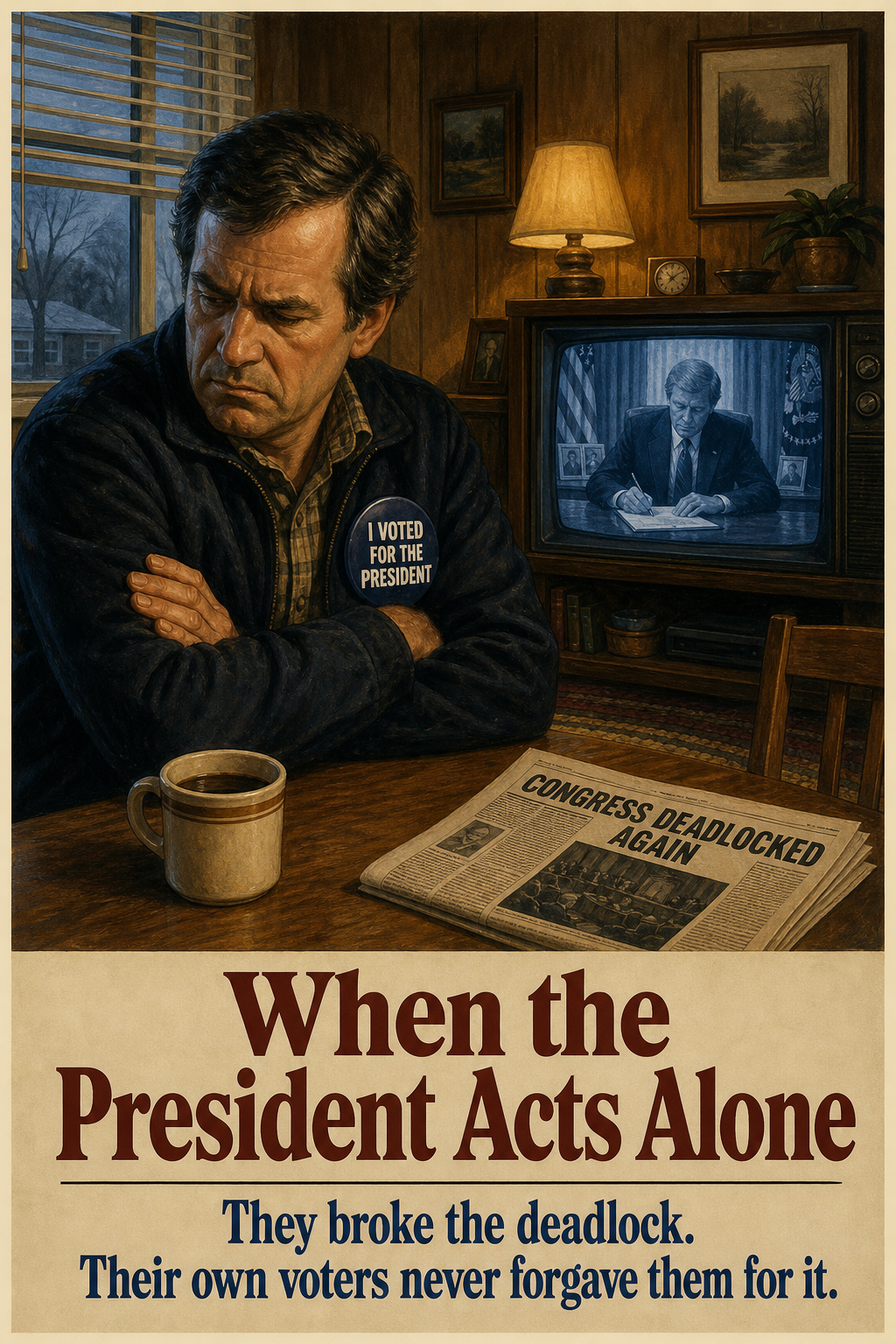
Unilateral Inaction: Congressional Gridlock, Interbranch Conflict, and Public Evaluations of Executive Power

Legislative Studies Quarterly · 2022

Andrew Reeves, Jon C. Rogowski

Public evaluations of executive power are shaped not only by presidential action, but also by inaction under congressional gridlock.

View abstract +

Presidents routinely overpromise and underdeliver, especially amid partisan polarization, narrow congressional majorities, and persistent gridlock. As Congress routinely stymies their legislative agendas, presidents consider alternative courses of action. We study public reactions to unilateral power in the context of congressional inaction. While some research suggests that presidents cannot afford to pass up opportunities to act, more recent scholarship indicates that the public holds negative views of unilateral power and disapproves of its use. Survey experiments conducted with a national sample of Americans provide evidence of the costs of unilateral power. Across three policy areas and between- and within-respondent analyses, the public responds negatively when presidents exercise unilateral power rather than accept the status quo, even among individuals who share the president’s policy views. Our results suggest that while legislative gridlock may increase the appeal of unilateral power, its use may come at a public cost.

Coefficient plot of unilateral action effects on presidential performance evaluations
2021 Article

Public Opinion and Public Support in Crisis Management

Encyclopedia of Crisis Analysis · 2021

Zoe Ang, Benjamin Noble, Andrew Reeves

This article examines how public opinion and electoral incentives shape crisis management responses by political leaders, especially U.S.

View abstract +

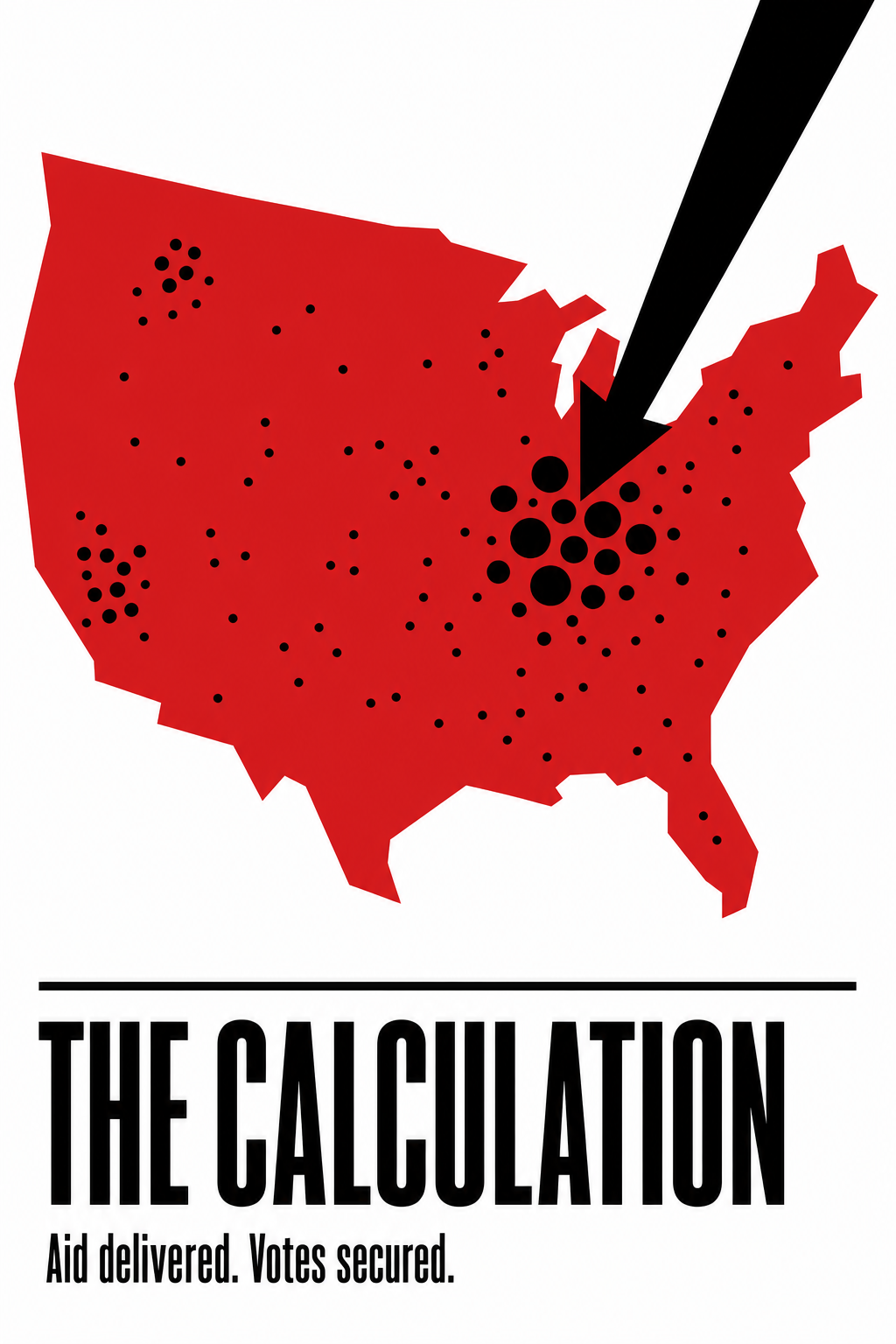
In times of crisis, citizens look to their leaders for aid and assistance. In the democratic context, the focal figure is likely the chief executive accountable to the whole of the nation. With a specific focus on the American president and the incidences of natural hazards, public opinion and governmental response to these crises are analyzed. While one may expect such a universal actor to aid each according to their need, new scholarship finds that voter behavior and electoral institutions incentivize the president to support only a small slice of the electorate. Empowered by federal disaster relief legislation in the 1950s, the president targets electorally valuable voters when disbursing aid or allocating resources in response to disaster damage. Voters in those areas respond myopically and tend to vote for the incumbent for reasons ranging from economic to emotional. Thus, elites anticipate voter reactions and strategically respond to disasters to mitigate blame or punishment for the event and capitalize on an opportunity for electoral gains.

Featured visual from Public Opinion and Public Support in Crisis Management
2018 Article

American Journal of Political Science

The Public Cost of Unilateral Action

American Journal of Political Science · 2018

Andrew Reeves, Jon C. Rogowski

Citizens penalize presidents who bypass Congress, even when they support the policy outcome.

View abstract +

Scholarship on democratic responsiveness focuses on whether political outcomes reflect public opinion but overlooks attitudes toward how power is used to achieve those policies. We argue that public attitudes toward unilateral action lead to negative evaluations of presidents who exercise unilateral powers and policies achieved through their use. Evidence from two studies supports our argument. In three nationally representative survey experiments conducted across a range of policy domains, we find that the public reacts negatively when policies are achieved through unilateral powers instead of through legislation passed by Congress. We further show these costs are greatest among respondents who support the president’s policy goals. In an observational study, we show that attitudes toward unilateral action in the abstract affect how respondents evaluate policies achieved through unilateral action by presidents from Lincoln to Obama. Our results suggest that public opinion may constrain presidents’ use of unilateral powers.

Featured visual from The Public Cost of Unilateral Action
2017 Article

Attitudes toward Delegation to Presidential Commissions

Presidential Studies Quarterly · 2017

David R. Miller, Andrew Reeves

Survey experiments show that delegating to presidential commissions does not increase public approval or perceived policy effectiveness compared to direct presidential action.

View abstract +

This article examines attitudes of the public toward delegation to presidential commissions. Using four survey experiments across a range of contexts, the authors compare public response to the creation of a commission versus direct presidential action. The findings indicate no significant difference in approval for taking action alone or delegating to a commission, at either the policy formulation or implementation stage. Additionally, policies formed by commissions are not seen as more effective than those formed by the president alone.

Featured visual from Attitudes toward Delegation to Presidential Commissions
2017 Article

Learning from Place in the Era of Geolocation

Analytics, Policy and Governance · 2017

Ryan T. Moore, Andrew Reeves

This chapter reviews current uses, opportunities, challenges, and privacy concerns related to individual geolocation data in social science and policy research.

Related themes Political Geography
View abstract +

In this chapter, we give an overview of the ways that scholars and policymakers are currently using individual geolocation data. We also describe some new analytic and service-provision possibilities that geolocation data enables. We discuss several challenges inherent in obtaining geolocation data and making that data useful for social, political, and policy research and practice. We highlight the unique concerns over privacy that arise in this rich data environment, and note some promising approaches for addressing them.

Featured visual from Learning from Place in the Era of Geolocation
2017 Article

The Contextual Determinants of Support for Unilateral Action

Presidential Studies Quarterly · 2017

Andrew Reeves et al.

Support for unilateral presidential action depends on the political and institutional context in which executive power is used.

View abstract +

This article reports a series of survey experiments (N > 7,500) examining whether public support for presidential unilateral action is sensitive to contextual factors such as the president's identity, the unilateral tool used, justifications for action, and the policy pursued. The authors find little evidence that context affects attitudes toward unilateral powers except in circumstances that invoke explicitly political factors. The findings suggest that public attitudes toward unilateral power are generally stable and have implications for understanding how public opinion constrains presidential power.

Featured visual from The Contextual Determinants of Support for Unilateral Action
2016 Article

The Journal of Politics

Unilateral Powers, Public Opinion, and the Presidency

The Journal of Politics · 2016

Andrew Reeves, Jon C. Rogowski

Public support for unilateral presidential powers is generally low, stable, and shaped by both approval of the current president and beliefs in the rule of law, with context further conditioning these attitudes.

View abstract +

This article explores mass attitudes toward unilateral presidential power. We argue that mass attitudes toward presidential power reflect evaluations of the current president as well as more fundamental conceptions about the nature of the office, which are rooted in beliefs about the rule of law. In four nationally representative surveys, we find low levels of support for unilateral powers, that these attitudes are stable over time, and that they are structured both by presidential approval and beliefs in the rule of law. In a fifth survey, we show that political context conditions support for unilateral power, and in a sixth we show that these attitudes are consequential for policy evaluation. Even during the Obama presidency, when presidential power is highly politicized, voters distinguish the president from the presidency. Our results have important implications for public opinion’s role in constraining the use of presidential power.

Featured visual from Unilateral Powers, Public Opinion, and the Presidency
2015 Article

Public Opinion toward Presidential Power

Presidential Studies Quarterly · 2015

Andrew Reeves, Jon C. Rogowski

Public support for presidential powers is shaped by approval of the president, with popular presidents able to leverage their prestige to expand executive authority.

View abstract +

This article examines public attitudes toward the levers of presidential power using data from a nationally representative survey. The authors find that respondents who provide higher approval ratings of the president are significantly more supportive of presidential powers. The findings suggest that views toward executive power are shaped by presidential approval and that popular presidents can use their prestige to expand the scope of powers available to the presidency.

Featured visual from Public Opinion toward Presidential Power
2015 Chapter

The Politics of Disaster Relief

Emerging Trends in the Social and Behavioral Sciences · 2015

Alexander Oliver, Andrew Reeves

This essay reviews research on how voters and politicians in the United States respond to severe weather events, highlighting key findings and future research directions in the politics of disaster relief.

View abstract +

This essay provides an overview of the research on the politics of disaster relief in the United States, focusing on the response of voters and politicians in the aftermath of severe weather events. It reviews foundational research, discusses recent advances, and addresses important issues for future research on this topic.

Featured visual from The Politics of Disaster Relief
2014 Article

Responsive Partisanship: Public Support for the Clinton and Obama Health Care Plans

Journal of Health Politics, Policy and Law · 2014

Douglas L. Kriner, Andrew Reeves

Public support for the Clinton and Obama health care plans was driven primarily by partisanship, with demographic factors playing a minimal role, and fluctuations in support closely tracked elite partisan rhetoric.

Related themes Democratic Accountability
View abstract +

We examine the contours of support for the Clinton and Obama health care plans during the 1990s and 2000s based on our own compilation of 120,000 individual-level survey responses from throughout the debates. Despite the rise of the Tea Party, and the racialization of health care politics, opinion dynamics are remarkably similar in both periods. Party ID is the single most powerful predictor of support for reform and the president’s handling of it. Contrary to prominent claims, after controlling for partisanship, demographic characteristics are at best weak predictors of support for reform. We also show that Clinton and Obama did not ‘‘lose’’ blacks, seniors, or wealthy voters over the course of the debate. The small and often nonexistent relationship between these characteristics and support for the plan are constant over time. Instead, the modest fluctuations in support for reform appear to follow the ebb and flow of elite rhetoric. Both mean levels of support and its volatility over time covary with elite partisan discourse. These findings suggest that presidents courting public opinion should seek consensus among their own party’s elites before appealing to other narrower interests.

Featured visual from Responsive Partisanship: Public Support for the Clinton and Obama Health Care Plans
2012 Article

Ecologies of Unease: Geographic Context and National Economic Evaluations

Political Behavior · 2012

Andrew Reeves, James G. Gimpel

The study finds that local economic conditions, including unemployment, fuel prices, and foreclosures, significantly shape national economic evaluations, especially among political independents, during the 2008 U.S.

View abstract +

Assessment of the nation’s economic performance has been repeatedly linked to voters’ decision-making in U.S. presidential elections. Here we inquire as to where those economic evaluations originate. One possibility in the politicized environment of a major campaign is that they are partisan determinations and do not reflect actual economic circumstances. Another possibility is that these judgments arise from close attention to news media, which is presumably highlighting national economic conditions as a facet of campaign coverage. Still a third explanation is that voters derive their national economic evaluations from living out their lives in particular localities which may or may not be experiencing the conditions that affect the nation as a whole. Drawing upon data from the 2008 presidential election, we find that varying local conditions do shape the economic evaluations of political independents. Moreover, unemployment is not the only salient factor, as fuel prices and foreclosures also figured prominently. Local economic factors, what we call geotropic considerations, shape national economic evaluations especially for those who aren’t making these judgments on simple partisan grounds.

Featured visual from Ecologies of Unease: Geographic Context and National Economic Evaluations
2012 Article

American Political Science Review

The Influence of Federal Spending on Presidential Elections

American Political Science Review · 2012

Douglas L. Kriner, Andrew Reeves

Voters reward presidents for increased federal spending in their communities, especially in battleground states and when partisan responsibility is clear.

View abstract +

Previous research on the electoral consequences of federal spending has focused almost exclusively on Congress, mostly with null results. However, in a county- and individual-level study of presidential elections from 1988 to 2008, we present evidence that voters reward incumbent presidents (or their party’s nominee) for increased federal spending in their communities. This relationship is stronger in battleground states. Furthermore, we show that federal grants are an electoral currency whose value depends on both the clarity of partisan responsibility for its provision and the characteristics of the recipients. Presidents enjoy increased support from spending in counties represented by co-partisan members of Congress. At the individual level, we also find that ideology conditions the response of constituents to spending; liberal and moderate voters reward presidents for federal spending at higher levels than conservatives. Our results suggest that, although voters may claim to favor deficit reduction, presidents who deliver such benefits are rewarded at the ballot box.

Featured visual from The Influence of Federal Spending on Presidential Elections
2011 Article

American Journal of Political Science

Make it Rain? Retrospection and the Attentive Electorate in the Context of Natural Disasters

American Journal of Political Science · 2011

John T. Gasper, Andrew Reeves

Voters punish presidents and governors for severe weather damage, but reward or punish them more strongly based on their actions in response to disasters, demonstrating that electorates can distinguish between random events and government responsibility.

View abstract +

Are election outcomes driven by events beyond the control of politicians? Democratic accountability requires that voters make reasonable evaluations of incumbents. Although natural disasters are beyond human control, the response to these events is the responsibility of elected officials. In a county-level analysis of gubernatorial and presidential elections from 1970 to 2006, we examine the effects of weather events and governmental responses. We find that electorates punish presidents and governors for severe weather damage. However, we find that these effects are dwarfed by the response of attentive electorates to the actions of their officials. When the president rejects a request by the governor for federal assistance, the president is punished and the governor is rewarded at the polls. The electorate is able to separate random events from governmental responses and attribute actions based on the defined roles of these two politicians.

Featured visual from Make it Rain? Retrospection and the Attentive Electorate in the Context of Natural Disasters
Forthcoming Article

Elections and Representation in American Municipal Administration: Elite Survey Evidence from Five New England States

Political Research Quarterly · Forthcoming

Wayde Z. C. Marsh et al.

Local selection rules shape how municipal administrators understand representation and accountability.

Related themes Democratic Accountability
View abstract +

Do selection methods for public officials impact how they represent their constituents? Municipal clerks in the New England states offer an ideal case to examine this question. As key government actors in full-service local governments with minimal overlapping jurisdictions, clerks in these states vary in how they are selected—either through election or appointment. Using an original online and mail survey of municipal clerks across five New England states, we find that elected clerks demonstrate a stronger orientation toward public service and are more responsive to constituent concerns. However, selection methods show little impact on substantive ideological, partisan, or policy representation. These findings highlight the relationship between the mode of selection and representation, offering a foundation for future research on other offices and dimensions of representation.
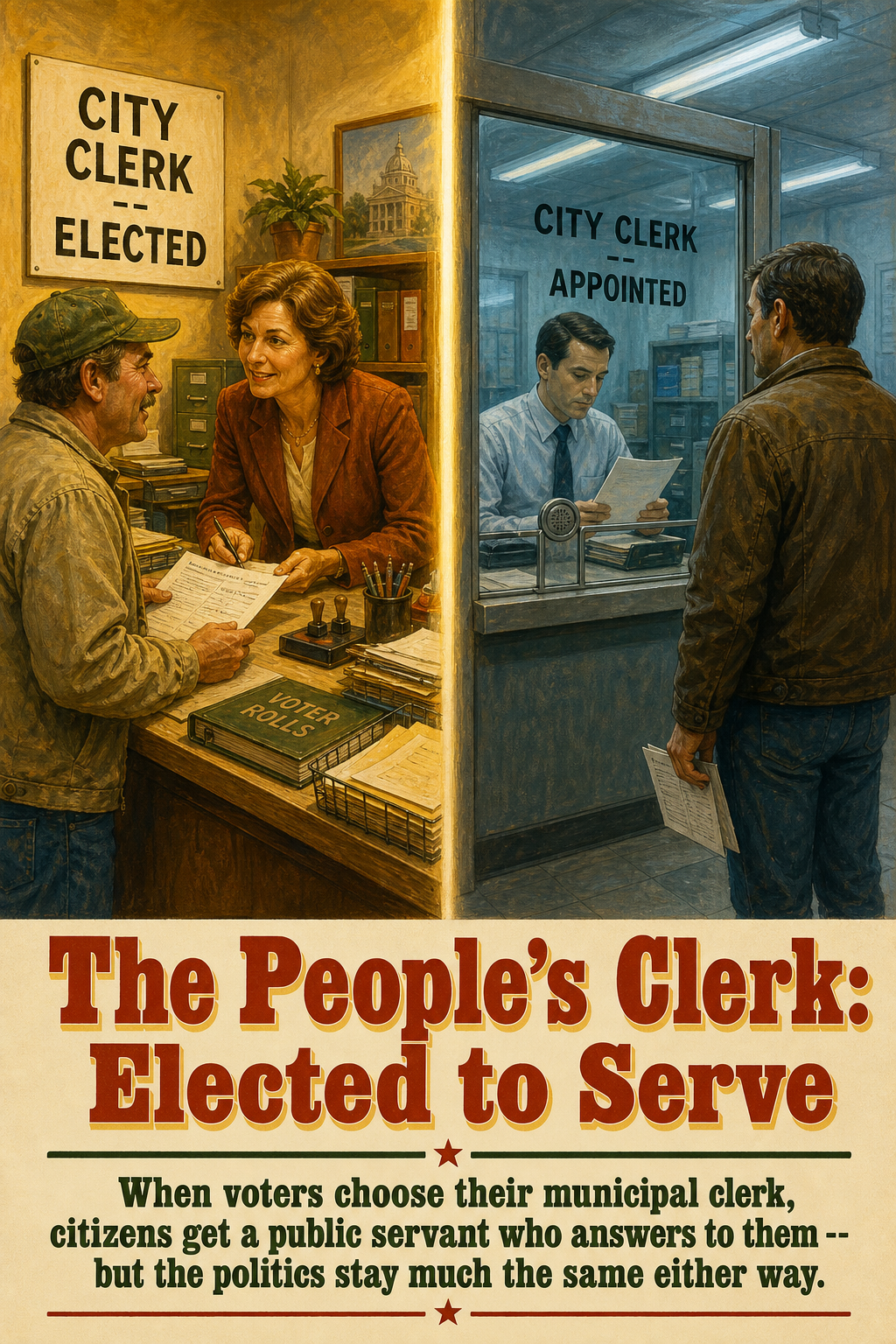
Six-panel chart comparing institutional capacity among appointed and elected municipal clerks