Research Theme

Political Geography

Research on how local context, spatial inequality, urban-rural divides, and place-based experience shape political behavior.

Political Geography Publications

Publication Type

Research Pathways

2024 Article

The Urban-Rural Divide and Residential Contentment as Antecedents of Political Ideology

Cities · 2024

James G. Gimpel, Andrew Reeves

The study finds that lower place attachment in urban areas contributes to more progressive political attitudes, while higher contentment in rural areas is associated with conservatism, helping explain the urban-rural political divide in the US.

View abstract +

We explore the foundations of the urban-rural political gulf, which is well-documented in the United States and other western democracies. We theorize that it is anchored in the variable extent of residents’ satisfaction and place attachment. Consistent with a long tradition of sociological findings, we first demonstrate that attachment to one’s neighborhood of residence is much higher among rural populations than in big cities. This variation in place attachment is an important font of political and policy attitudes, substantively contributing to the ideological differences between urban and rural areas. Politically relevant grievances arise most acutely when they are shared as prevailing conditions in specific social environments. The more dissatisfied one is with the place they live, the more attractive they find the policy goals and political agenda of liberal progressivism in US politics. Greater contentment with place, on the other hand, is predictive of politically conservative viewpoints.

Featured visual from The Urban-Rural Divide and Residential Contentment as Antecedents of Political Ideology
2022 Article

Crime and Presidential Accountability: A Case of Racially Conditioned Issue Ownership

Public Opinion Quarterly · 2022

Benjamin Noble, Andrew Reeves, Steven W. Webster

Anxiety about crime reduces presidential approval, but this effect is conditioned by both the race of the respondent and the party of the president, with White Americans punishing Democratic presidents and Black Americans punishing Republican presidents when anxious about crime.

View abstract +

Americans are anxious about crime regardless of their actual exposure or risk. Given this pervasive concern, US presidents frequently talk about crime, take actions to address it, and list crime prevention efforts among their top accomplishments. We argue that presidents act this way, in part, because fear of crime translates into lowered presidential approval. However, this penalty is not applied evenly. Given the parties’ stances toward crime and the criminal justice system, White Americans punish Democratic presidents (i.e., Clinton and Obama) more severely when they are anxious about crime, while Black Americans are more punitive toward Republican presidents (i.e., Bush and Trump). We examine twenty years of survey data and find evidence consistent with our theory. Our results suggest that the relationship between fear of crime and presidential accountability is conditioned by an individual’s race and the president’s party.

Featured visual from Crime and Presidential Accountability: A Case of Racially Conditioned Issue Ownership
2022 Chapter

Electoral Geography, Political Behavior and Public Opinion

Handbook on Politics and Public Opinion, Edward Elgar Publishing · 2022

James G. Gimpel, Andrew Reeves

Electoral geography shows how local context and spatial patterns structure political behavior and public opinion.

View abstract +

Politically relevant identities and opinions about politics and government are neither randomly nor evenly distributed across space. The task of social scientists studying electoral geography is to understand why. Explanations go to individual characteristics, the characteristics of the settings where they live out their lives, or interesting interactions of the two. Moreover, social influence apparently has a physical and geographic component in the sense that proximity matters. Although people can form more contacts over longer distances than in the past, that does not seem to have diminished the greater weight placed on contacts close-by, pointing to the sustained coincidence of social and geographic space. Size and density of settlement also matter over and above compositional effects, continuing to account for many negative social outcomes. The chapter closes with the consideration of challenges to social scientific inference posed by the effort to account for the experience of a living in a multi-level world.

Featured visual from Electoral Geography, Political Behavior and Public Opinion
2022 Article

Reconsidering Bellwether Locations in U.S. Presidential Elections

Presidential Studies Quarterly · 2022

James G. Gimpel, Andrew Reeves, Sean Trende

Bellwether counties reveal how geographic polarization reshaped the places that once mirrored national electoral outcomes.

Related themes Political Geography
View abstract +

We examine the notion of a “bellwether” location in the electoral political context. Bellwethers are thought to have predictive power because they supposedly signal how the entire electorate will move on election day. We consider how the number of bellwether counties—defined in several ways—has fluctuated since the 1930s. We also explore the extent to which bellwethers successfully predict future elections. With the proliferation of geographic polarization, few counties can successively and successfully pick the winner of presidential elections. Other bellwether measures fare slightly better or worse, but as Tufte and Sun (1975) found nearly half a century ago, bellwethers today continue to be poor predictors of future performance.

Featured visual from Reconsidering Bellwether Locations in U.S. Presidential Elections
2020 Article

Defining Racial and Ethnic Context with Geolocation Data

Political Science Research and Methods · 2020

Ryan T. Moore, Andrew Reeves

This study shows that static geographic measures overstate the extremity of individuals’ racial and ethnic contexts compared to dynamic measures using GPS data from over 400 individuals.

Related themes Political Geography
View abstract +

Across disciplines, scholars strive to better understand individuals’ milieus—the people, places, and institutions individuals encounter in their daily lives. In particular, political scientists argue that racial and ethnic context shapes attitudes about candidates, policies, and fellow citizens. Yet, the current standard of measuring milieus is to place survey respondents in a geographic container and then to ascribe all that container’s characteristics to the individual’s milieu. Using a new dataset of over 2.6 million GPS records from over 400 individuals, we compare conventional static measures of racial and ethnic context to dynamic, precise measures of milieus. We demonstrate how low-level static measures tend to overstate how extreme individuals’ racial and ethnic contexts are and offer suggestions for future researchers.

Map of OpenPaths geolocation observations across the United States
2020 Article

Local Unemployment and Voting for President: Uncovering Causal Mechanisms

Political Behavior · 2020

Taeyong Park, Andrew Reeves

This study finds that both mediated economic voting and issue-ownership voting mechanisms link local unemployment to presidential voting, with rising local unemployment increasing support for Democratic candidates but decreasing support for incumbents through perceptions of the national economy.

View abstract +

How does local unemployment influence presidential elections? Some argue that, for voters, the state of the local economy is an afterthought to that of the national economy. On the other hand, those who argue that local unemployment matters fall into two camps. Recent research finds that local unemployment is a reputation issue that benefits Democratic candidates because voters believe they are the party best equipped to deal with the issue. Alternatively, others have posited that the local economy provides voters with information for evaluating the governing party’s job performance. This view holds that the incumbent party, Democrat or Republican, will be punished when local unemployment is high. In this article, we investigate these distinct mechanisms jointly. In an individual-level mediation analysis of the 2008, 2012, and 2016 presidential elections, we present evidence that both mechanisms are at work. Rising local unemployment bolsters support for Democratic presidential candidates, but, through its influence on views of the national economy, drives down support for the incumbent, Democrat or Republican.

Three-panel coefficient plot of local unemployment effects on incumbent-party vote choice
2020 Article

The Urban-Rural Gulf in American Political Behavior

Political Behavior · 2020

James G. Gimpel et al.

Urban-rural differences help explain enduring divides in American political behavior and public opinion.

View abstract +

Urban–rural differences in partisan political loyalty are as familiar in the United States as they are in other countries. In this paper, we examine Gallup survey data from the early-2000s through 2018 to understand the urban–rural fissure that has been so noticeable in recent elections. We consider the potential mechanisms of an urban–rural political divide. We suggest that urban and rural dwellers oppose each other because they reside in far apart locations without much interaction and support different political parties because population size structures opinion quite differently in small towns compared with large cities. In particular, we consider the extent to which the compositional characteristics (i.e., race, income, education, etc.) of the individuals living in these locales drives the divide. We find that sizable urban–rural differences persist even after accounting for an array of individual-level characteristics that typically distinguish them.

Featured visual from The Urban-Rural Gulf in American Political Behavior
2018 Article

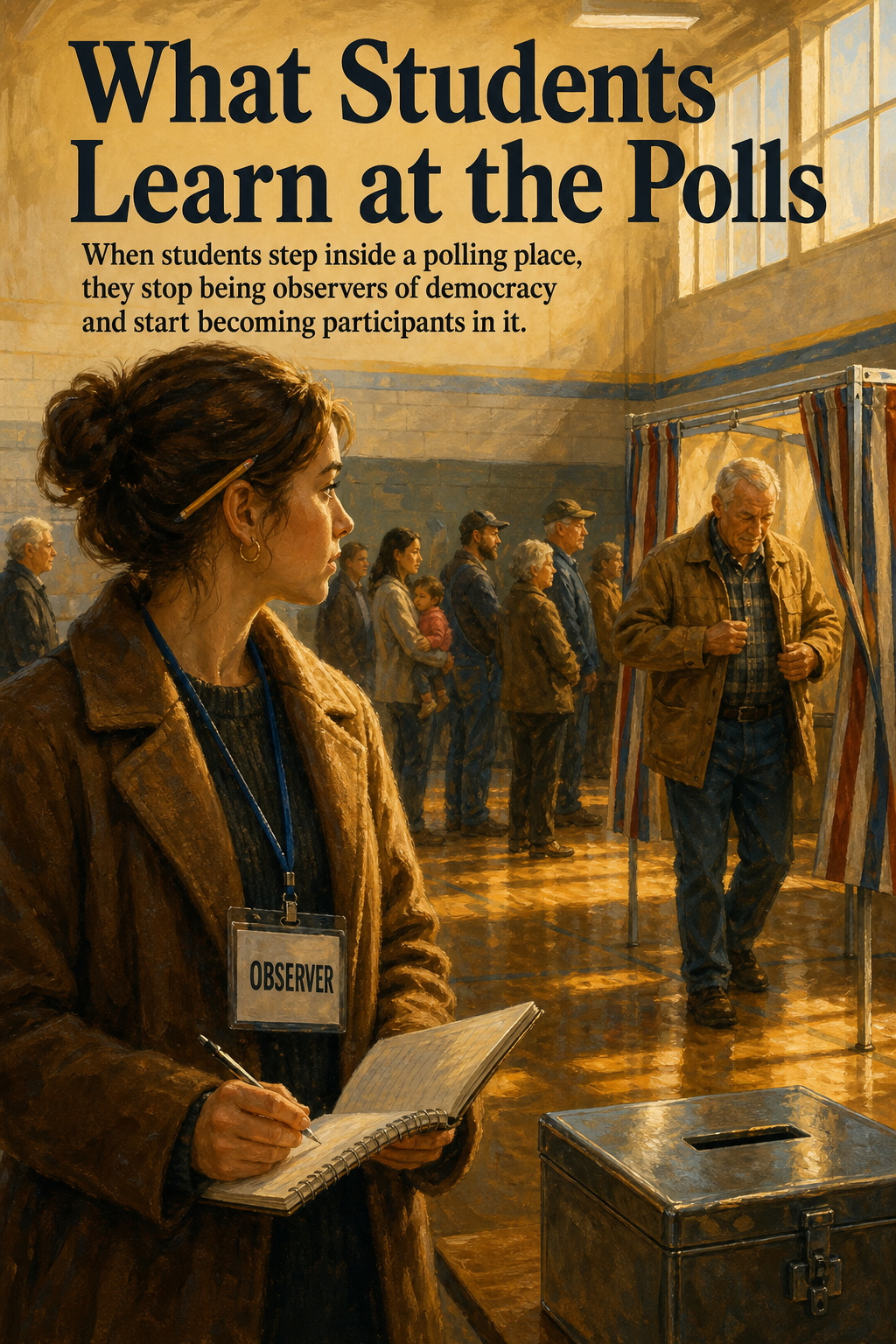
Pedagogical Value of Polling Place Observation By Students

PS: Political Science & Politics · 2018

Christopher B. Mann et al.

Observing polling places as part of a multi-campus research project provided students with valuable experiential learning, increasing their knowledge and engagement with election science and democratic processes.

Related themes Political Geography
View abstract +

We report on an evaluation of the pedagogical value of a research project involving 23 colleges and universities across the country. Faculty trained and supervised students who observed polling places in the 2016 General Election. Our findings indicate that this was a valuable learning experience in both the short and long terms. Students found their experiences to be valuable and reported learning generally and specifically related to course material. Postelection, they also felt more knowledgeable about election science topics, voting behavior, and research methods. Students reported interest in participating in similar research in the future, would recommend other students to do so, and expressed interest in more learning and research about the topics central to their experience. Our results suggest that participants appreciated the importance of elections and their study. Collectively, the participating students are engaged and efficacious—essential qualities of citizens in a democracy.

Featured visual from Pedagogical Value of Polling Place Observation By Students
2017 Article

Learning from Place in the Era of Geolocation

Analytics, Policy and Governance · 2017

Ryan T. Moore, Andrew Reeves

This chapter reviews current uses, opportunities, challenges, and privacy concerns related to individual geolocation data in social science and policy research.

Related themes Political Geography
View abstract +

In this chapter, we give an overview of the ways that scholars and policymakers are currently using individual geolocation data. We also describe some new analytic and service-provision possibilities that geolocation data enables. We discuss several challenges inherent in obtaining geolocation data and making that data useful for social, political, and policy research and practice. We highlight the unique concerns over privacy that arise in this rich data environment, and note some promising approaches for addressing them.

Featured visual from Learning from Place in the Era of Geolocation
2012 Article

Ecologies of Unease: Geographic Context and National Economic Evaluations

Political Behavior · 2012

Andrew Reeves, James G. Gimpel

The study finds that local economic conditions, including unemployment, fuel prices, and foreclosures, significantly shape national economic evaluations, especially among political independents, during the 2008 U.S.

View abstract +

Assessment of the nation’s economic performance has been repeatedly linked to voters’ decision-making in U.S. presidential elections. Here we inquire as to where those economic evaluations originate. One possibility in the politicized environment of a major campaign is that they are partisan determinations and do not reflect actual economic circumstances. Another possibility is that these judgments arise from close attention to news media, which is presumably highlighting national economic conditions as a facet of campaign coverage. Still a third explanation is that voters derive their national economic evaluations from living out their lives in particular localities which may or may not be experiencing the conditions that affect the nation as a whole. Drawing upon data from the 2008 presidential election, we find that varying local conditions do shape the economic evaluations of political independents. Moreover, unemployment is not the only salient factor, as fuel prices and foreclosures also figured prominently. Local economic factors, what we call geotropic considerations, shape national economic evaluations especially for those who aren’t making these judgments on simple partisan grounds.

Featured visual from Ecologies of Unease: Geographic Context and National Economic Evaluations
2012 Article

American Political Science Review

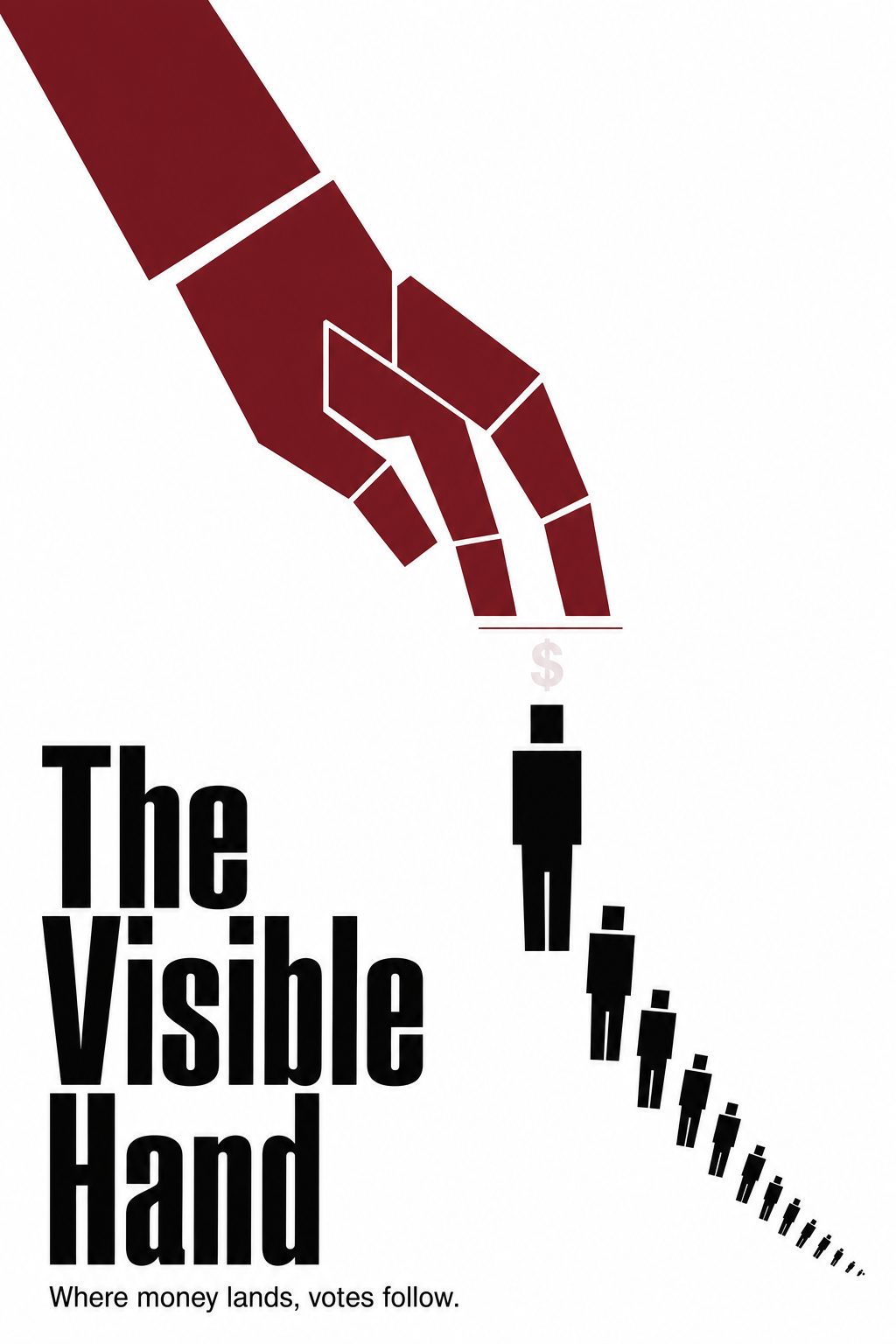
The Influence of Federal Spending on Presidential Elections

American Political Science Review · 2012

Douglas L. Kriner, Andrew Reeves

Voters reward presidents for increased federal spending in their communities, especially in battleground states and when partisan responsibility is clear.

View abstract +

Previous research on the electoral consequences of federal spending has focused almost exclusively on Congress, mostly with null results. However, in a county- and individual-level study of presidential elections from 1988 to 2008, we present evidence that voters reward incumbent presidents (or their party’s nominee) for increased federal spending in their communities. This relationship is stronger in battleground states. Furthermore, we show that federal grants are an electoral currency whose value depends on both the clarity of partisan responsibility for its provision and the characteristics of the recipients. Presidents enjoy increased support from spending in counties represented by co-partisan members of Congress. At the individual level, we also find that ideology conditions the response of constituents to spending; liberal and moderate voters reward presidents for federal spending at higher levels than conservatives. Our results suggest that, although voters may claim to favor deficit reduction, presidents who deliver such benefits are rewarded at the ballot box.

Featured visual from The Influence of Federal Spending on Presidential Elections
2011 Article

American Journal of Political Science

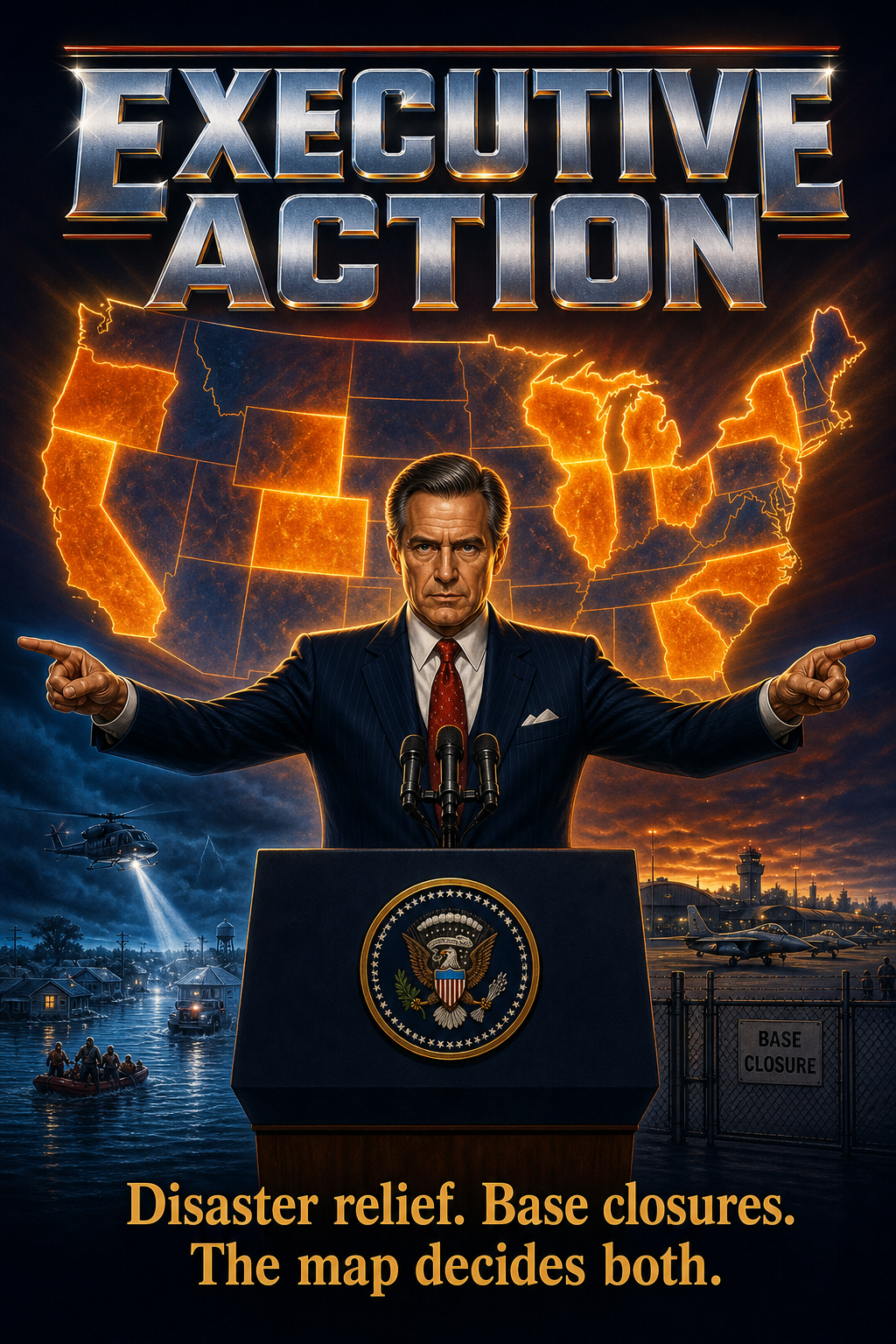
Make it Rain? Retrospection and the Attentive Electorate in the Context of Natural Disasters

American Journal of Political Science · 2011

John T. Gasper, Andrew Reeves

Voters punish presidents and governors for severe weather damage, but reward or punish them more strongly based on their actions in response to disasters, demonstrating that electorates can distinguish between random events and government responsibility.

View abstract +

Are election outcomes driven by events beyond the control of politicians? Democratic accountability requires that voters make reasonable evaluations of incumbents. Although natural disasters are beyond human control, the response to these events is the responsibility of elected officials. In a county-level analysis of gubernatorial and presidential elections from 1970 to 2006, we examine the effects of weather events and governmental responses. We find that electorates punish presidents and governors for severe weather damage. However, we find that these effects are dwarfed by the response of attentive electorates to the actions of their officials. When the president rejects a request by the governor for federal assistance, the president is punished and the governor is rewarded at the polls. The electorate is able to separate random events from governmental responses and attribute actions based on the defined roles of these two politicians.

Featured visual from Make it Rain? Retrospection and the Attentive Electorate in the Context of Natural Disasters
2011 Article

Turning Out the Base or Appealing to the Periphery? An Analysis of County-Level Candidate Appearances in the 2008 Presidential Campaign

American Politics Research · 2011

Lanhee J. Chen, Andrew Reeves

In the 2008 presidential campaign, McCain-Palin targeted core Republican counties while Obama-Biden focused on counties with significant population growth, reflecting divergent base and peripheral campaign strategies.

Related themes Political Geography
View abstract +

We examine county-level campaign appearances by the Republican and Democratic tickets during the 2008 general election. Our analysis reveals that the McCain-Palin ticket campaigned in a way that was quite different from the Obama-Biden ticket. McCain-Palin pursued a “base” strategy that was focused on counties where Bush-Cheney performed well in 2004. They also stayed away from counties that showed vote swings from 2000 to 2004 or population growth. On the other hand, the performance of the Kerry-Edwards ticket in 2004 was a very weak predictor of where Obama-Biden campaigned in 2008. They pursued a “peripheral” strategy that targeted counties that had experienced significant population growth. Their efforts to target peripheral, rather than base constituencies, have significant implications for our understanding of presidential campaign strategy.

Featured visual from Turning Out the Base or Appealing to the Periphery? An Analysis of County-Level Candidate Appearances in the 2008 Presidential Campaign
Forthcoming Article

Short-Haul Moves and the Political Geography of Partisanship: Intrametropolitan Migration as a Force for Change in U.S. Politics

Urban Affairs Review · Forthcoming

James G. Gimpel, Jordon Newton, Andrew Reeves

Short-distance residential moves within metropolitan areas modestly but clearly reinforce partisan sorting across local political environments.

Related themes Political Geography
View abstract +

We consider how the high volume of short-distance migration within metropolitan areas contributes to partisan sorting across the United States. Compared to long-distance moves, these local moves involve many more individuals each year and thus have substantial potential to shape political geography. At the same time, short-distance moves set a high bar for any assortative hypothesis because local movers face more limited destination options. If one cannot find a more politically compatible neighborhood nearby, it may be impossible to move to one. We draw on voter records comparing movers and nonmovers within 215 metro areas across nine states. Our results show surprisingly high levels of sorting even when moves occur within the same core-based statistical area and state. These patterns persist even after accounting for other destination characteristics known to influence relocation. Short-distance moves contribute modestly but meaningfully to the growing political lopsidedness of many legislative districts between censuses.
Featured visual from Short-Haul Moves and the Political Geography of Partisanship: Intrametropolitan Migration as a Force for Change in U.S. Politics