Presidential Particularism in Disaster Declarations and Military Base Closures
This article finds that U.S.
Why It Matters
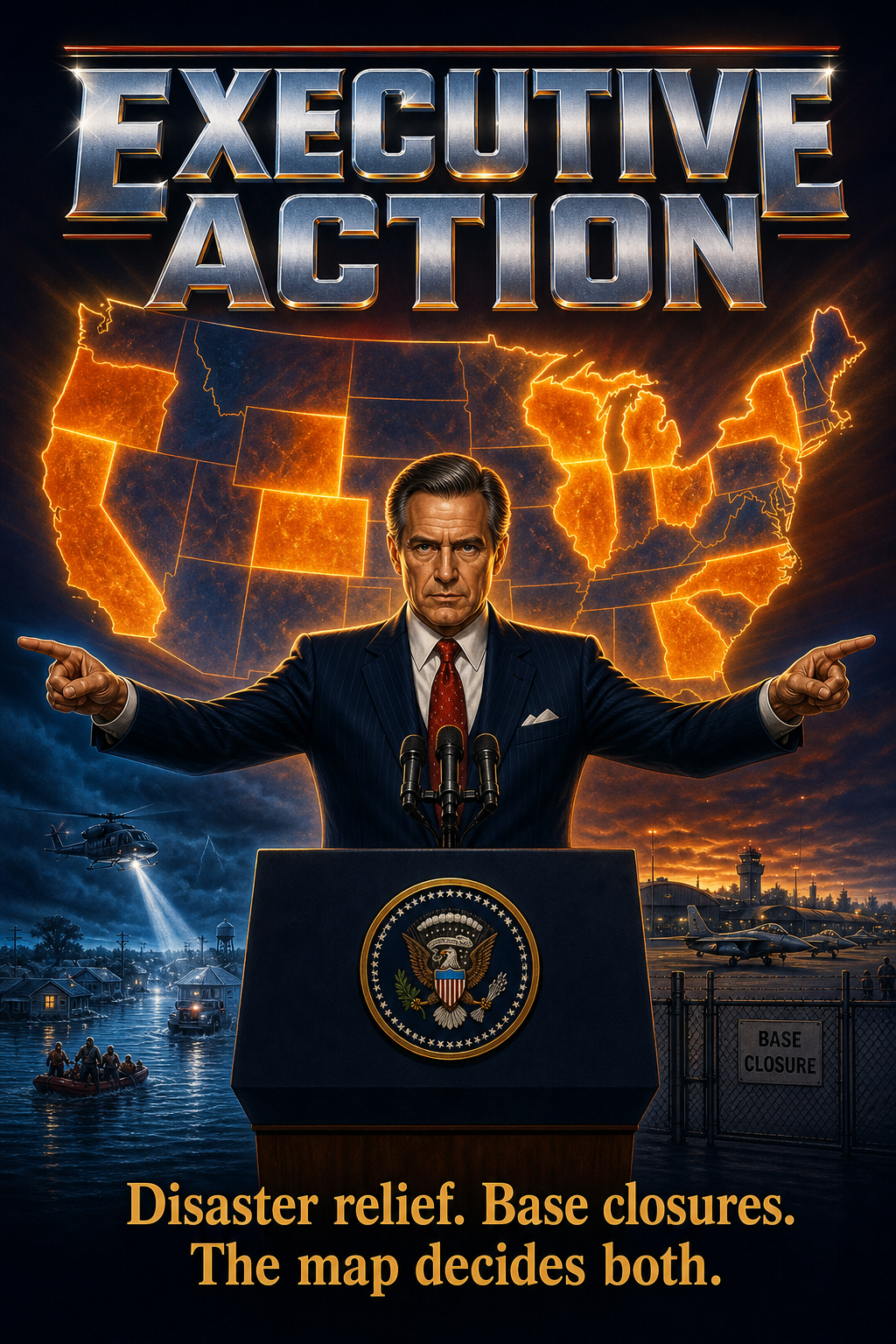
The publication begins with a motivating question: S. presidents act universally in distributive politics, or do they engage in particularism by favoring certain constituencies in disaster declarations and military base closures?
Its central contribution is to show that this article finds that U.S.
It matters because the findings connect institutional choices to the way authority, public responsibility, and political behavior are experienced in practice.
Key Findings
- Presidents have strong electoral and partisan incentives to prioritize some constituencies over others in distributive policy decisions.
- In disaster declarations, both swing states and core partisan states were more likely to receive aid, especially in election years.
- During the Obama administration, swing and core states were even more likely to receive disaster declarations in the 2012 election year.
- In the 1990 military base closure round, districts represented by Democrats and those not in swing states were more likely to be targeted for closure, indicating both partisan and electoral particularism.
- Presidential particularism is evident even in policy areas where universalism is normatively expected, such as disaster response and national security.
Research Design
- Design
- Article
- Data
- Federal Emergency Management Agency disaster declaration data; University of South Carolina’s Spatial Hazard Events and Losses Database for the United States (SHELDUS); Scott Adler’s Congressional District Data Base for the 101st Congress
- Geography
- United States
- Time Period
- 1984–2013 (disaster declarations); 1990 (military base closures)
- Unit of Analysis
- county-year (disaster declarations); congressional district (base closures)
- Methods
- Quantitative analysis of presidential disaster declarations from 1984 to 2013 using logistic regression models with county-level fixed effects.; Analysis of military base closures in 1990 using regression models to assess the influence of district partisanship and swing state status.
Citation
Kriner, Douglas L., and Andrew Reeves. 2015. "Presidential Particularism in Disaster Declarations and Military Base Closures." Presidential Studies Quarterly 45(4): 679-702.
- Venue
- Presidential Studies Quarterly
- Volume
- 45
- Issue
- 4
- Pages
- 679-702