Attitudes toward Delegation to Presidential Commissions
Survey experiments show that delegating to presidential commissions does not increase public approval or perceived policy effectiveness compared to direct presidential action.
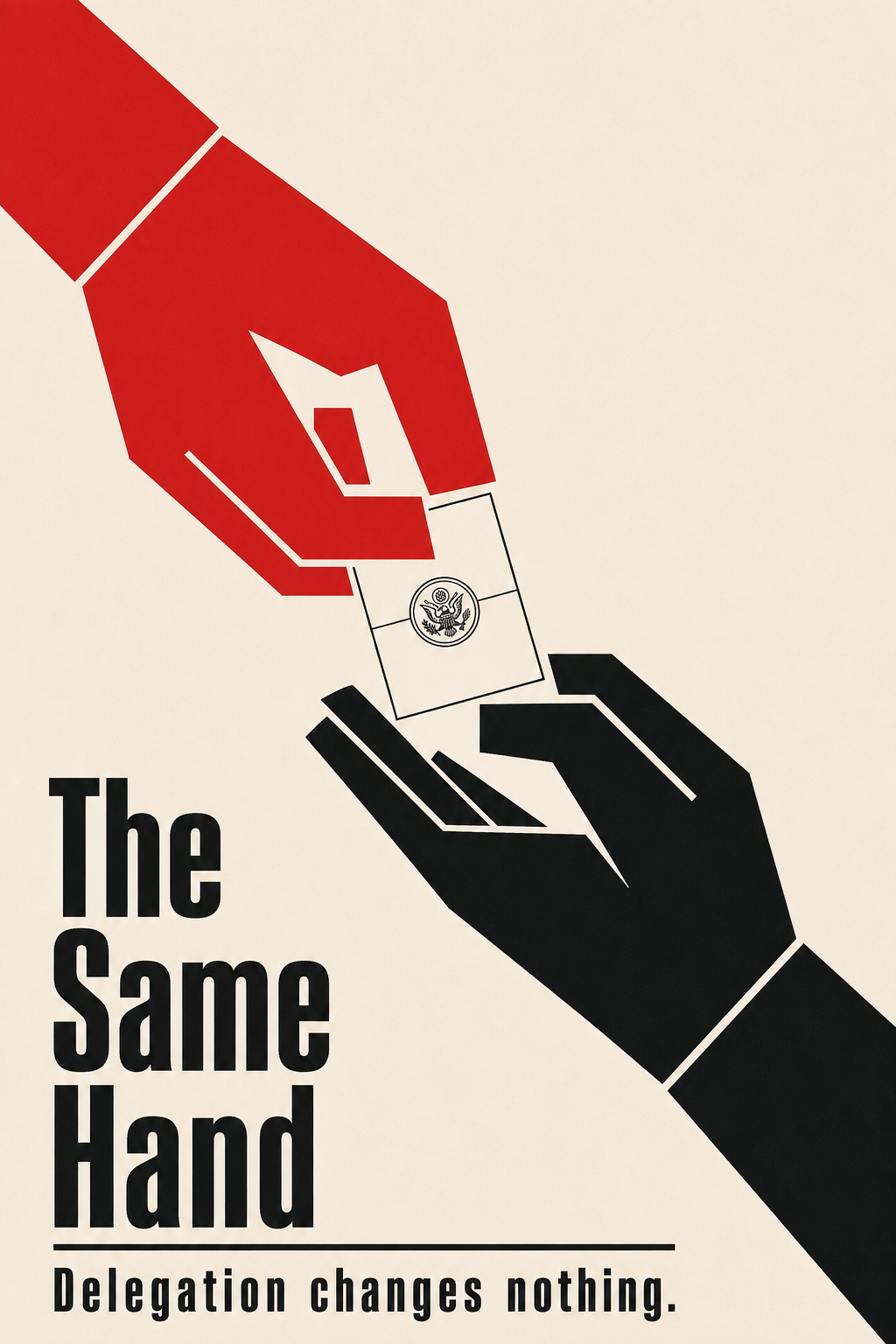
Why It Matters
The publication begins with a motivating question: Do presidential commissions increase public approval or perceived effectiveness of policies compared to direct presidential action?
Its central contribution is to show that survey experiments show that delegating to presidential commissions does not increase public approval or perceived policy effectiveness compared to direct presidential action.
It matters because the findings connect institutional choices to the way authority, public responsibility, and political behavior are experienced in practice.
Key Findings
- There is no significant difference in public approval between direct presidential action and delegation to a presidential commission.
- Policies formed by commissions are not seen as more effective than those formed by the president alone.
- Presidential commissions can satisfy public demand for action as effectively as direct action, but do not confer additional credibility or perceived efficacy.
Research Design
- Design
- Article
- Data
- Survey experiments conducted on Amazon Mechanical Turk (MTurk)
- Geography
- United States
- Time Period
- 2016–2017 (survey fielding period)
- Unit of Analysis
- individual survey respondent
- Methods
- Four survey experiments using vignettes based on real-world policy issues addressed by President Obama.; Random assignment of respondents to conditions describing direct presidential action, commission delegation, or control.; Measurement of approval and perceived policy effectiveness using Likert scales.
Full Abstract
This article examines attitudes of the public toward delegation to presidential commissions. Using four survey experiments across a range of contexts, the authors compare public response to the creation of a commission versus direct presidential action. The findings indicate no significant difference in approval for taking action alone or delegating to a commission, at either the policy formulation or implementation stage. Additionally, policies formed by commissions are not seen as more effective than those formed by the president alone.
Citation
Miller, David R., and Andrew Reeves. 2017. "Attitudes Toward Delegation to Presidential Commissions." Presidential Studies Quarterly 47(3): 495–516. https://doi.org/10.1111/psq.12393
- Venue
- Presidential Studies Quarterly
- Volume
- 47
- Issue
- 3
- Pages
- 495–516
- DOI
- 10.1111/psq.12393